Showing posts with label HumaniTours. Show all posts

Thursday, June 27, 2013

Traveling With A Purpose

The 18th HumaniTour Viet Nam: September 12-24, 2013.

Carol Pucci – Seattle Times: They'll do the usual sightseeing, but they'll also take time out to visit schools, orphanages and hospitals, delivering clothes, medical supplies and toys they spent the past few months collecting. It's called traveling with a purpose, a chance to not only explore another part of the world, but to make a difference in people's lives.

Penny LeGate – KIRO television: Participants get a whirlwind swing through north, south and central Vietnam, dropping in on some of the country's most famous sites. Sprinkled throughout are visits to orphanages and schools and other important places. Traveling with Pham, the inaccessible is accessible. He is our educator, our translator, our facilitator, and the connector to packs of needy kids.


For more information, visit: www.humanitours.blogspot.com or email: info@kidswithnoborders.org .

Sunday, May 5, 2013

Mother's Day is coming ...

Support KIDS WITHOUT BORDERS Teach Me To Fish program with your purchase.
Mother's Day is coming close! Get your mom the gift that shine Lives! 25% OFF Selected Items. 10% Extra Code: LOVEUMOM


Friday, December 28, 2012

Kids Without Borders HumaniTour Viet Nam

Kids Without Borders founder Son Michael Pham led another successful mission to Viet Nam in November 2012. You can view stories and photos from the 17th HumaniTour Viet Nam via KWB Facebook Page


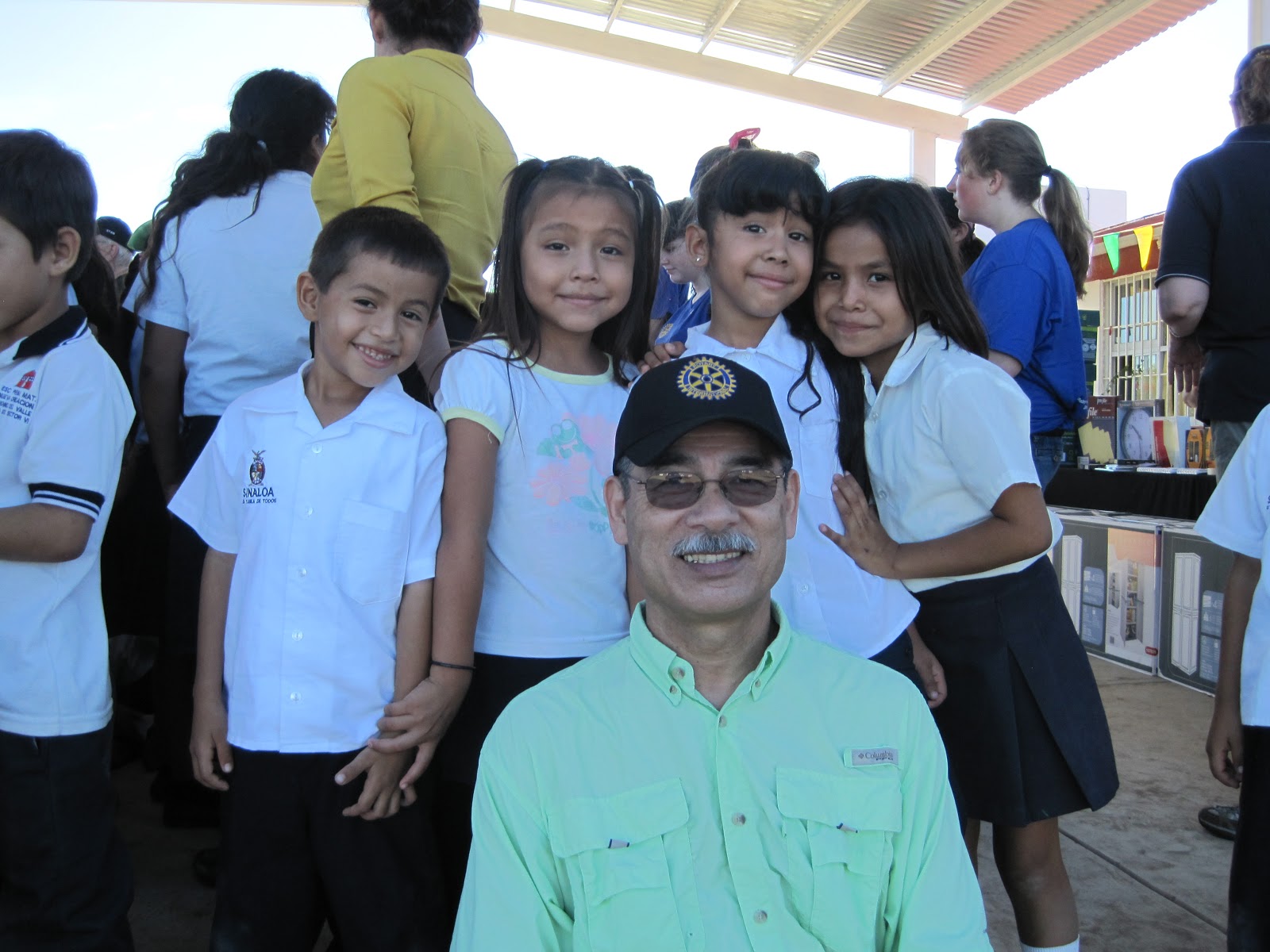
Wheelchair distribution in Mexico

October 2012

Welcome Home, Mike and Alex Shimizu, Kids Without Borders donors/supporters/volunteers.

Mike and Alex returned home (Shoreline, Washington) from their annual humanitarian mission. This year, they traveled to Mexico and involved with another Rotary / Wheelchair Foundation wheelchair distribution. They also brought along two full suitcases of new children clothes and toys from Kids Without Borders and delivered these during a visit to an orphanage.

Through Mike and Alex's efforts, more than 5,000 wheelchairs have been distributed to many countries over the last 9 years.


Tuesday, July 31, 2012

Agent Orange Champion Charles Bailey

There are people around the world who have devoted their time and energy to understanding the legacy of Agent Orange and coming up with solutions to address this problem. These champions come from all different backgrounds and levels of expertise, but all are true humanitarians that are helping make Agent Orange history.
Members of Rotary International and Vietnam Dialogue Group
at the dedication of a water system in Dong Son Commune
(central Viet Nam, May 2012)

Our Man in Hanoi
Charles Bailey Tackles the Vietnam War's Unfinished Business
By Peter Slavin
Swarthmore College Bulletin
For years Charles Bailey ’67 has awakened every morning thinking about his job: how to restore the ruined fields, forests, and rice paddies and help the human casualties of Agent Orange in Vietnam. For the Vietnamese people, Agent Orange has been the lasting curse of what they call “the American War.”
Five months after the Ford Foundation made Bailey its man in Hanoi in 1997, he went to the central highlands, the locus of heavy fighting during the war. Coming upon a huge pine-tree plantation in a valley, it dawned on him, as an agricultural economist, that the pines had been planted where an entire jungle had once stood. He learned that the valley had been wiped clean by aerial spraying during the war. He thought of Agent Orange, the most common and most toxic of the chemical herbicides applied in vast quantities by the U.S. military from 1961 to 1971.
The aim was to destroy all vegetation and thereby eliminate the Viet Cong’s food sources and hiding places. Vietnam’s Red Cross estimates that herbicides cut short the lives or disabled up to 3 million adults and children. And the impact apparently continues with a third generation.
DIOXIN STILL DEBILITATING
The great concern of the Vietnamese has been these children, the offspring of people exposed to the spraying. “Almost 50 years later, babies are being born disabled,” says former Ford Foundation President Susan Berresford. “They’re not even the children of people who were in the war. They’re just children who live in an area where they imbibe the fish or duck or whatever it is that carries this.” Despite the claims, the U.S. government has been highly skeptical for decades of dioxin’s impact on human health.
Dioxin is the chief contaminant in Agent Orange. It’s a class of chemicals so poisonous it is tested in parts per trillion and remains toxic for decades. The diseases attributed to it include cancer, heart disease, diabetes, and nerve disorders. At least one generation of Vietnamese children has been afflicted with birth defects, including spina bifida. The Vietnamese also blame dioxin for children born with extra fingers and toes.
The more than 2 million American troops in Vietnam who may have been exposed to Agent Orange—how many to a dangerous degree is unknown—eventually won the possibility of aid from Congress. Any Vietnam veteran who later developed any of 14 diseases and conditions is entitled to disability compensation, expected to total $42 billion by 2022. By contrast, the United States offered Vietnam no help in dealing with Agent Orange until a few years ago.
THE FROZEN PERIOD
After visiting the highlands 14 years ago, Bailey tried to determine the extent of the damage that Agent Orange inflicted in Vietnam. “But nobody [from either nation] wanted to talk about it at all,” he says. The two countries were miles apart on the question of American accountability for the legacy of Agent Orange. At one pole were the Vietnamese who demanded justice for Agent Orange’s human and ecological casualties; at the other were Americans who insisted on scientific proof that the chemical was responsible. Bailey calls these years of deadlock “the frozen period.”
The more he learned, the more dismayed he became by how his government had muddied the waters and evaded its responsibility for Agent Orange’s aftermath. He grew increasingly aware of the defiled land, lingering dioxin “hot spots,” and the ill health and disabilities among the Vietnamese—the war’s “open wounds,” as a report later put it.
Then a U.S. embassy official presented plans to spend $50 million on large-scale testing in Vietnam “to show that the dioxin in people’s bodies came from sources other than the U.S. spraying during the war,” Bailey recalls. The plan went nowhere, but it fired his resolve to do something about Agent Orange. He decided his foundation could go where diplomats feared to tread. He has been walking that fine line between polarized camps ever since.
Initially, it was a slog. The frozen period went on and on. Though Bailey wanted to give the Vietnamese grants for Agent Orange projects, between 1998 and 2005 he was able to fund just three. “People did not want to work on it,” he says, marveling. “I’d never had anyone anywhere in the world not want a grant from the Ford Foundation.”
That’s something, considering Bailey spent spent more than three decades as a grant maker for the foundation, working in the Indian subcontinent, the Middle East, and Africa besides Southeast Asia. After graduating from Swarthmore with a history degree, Bailey was a Peace Corps volunteer in Nepal, then picked up an M.P.A. in public policy from Princeton before joining Ford in 1972. He later earned a Ph.D. in agricultural economics from Cornell University.
BREAKING THE ICE
Work did get underway on the three grants Bailey arranged for Vietnam. The first provided wheelchairs, prosthetics, and other help to people with disabilities. Next, Bailey sought to assess all 2,735 former U.S. military bases in southern Vietnam to identify any that still harbored dangerous levels of dioxin. Remarkably, a Canadian study found that dioxin no longer contaminated the soil in landscapes where it had been sprayed. It was concentrated primarily at former U.S. bases where it had been stored and loaded aboard aircraft. The third grant funded a conference at which Vietnamese and American officials finally broke the ice, talking informally about Agent Orange.
In 2004, a new American ambassador, Michael Marine, arrived in Hanoi. Marine drew on Bailey’s work to make the case that the United States should do more. He found Bailey’s very different attitude “tremendously important, because at that time everyone else was turning their backs on the issue.” Agent Orange was “a dead issue” until Bailey came along, Marine said, according to Susan Berresford.
The turning point came when President George W. Bush visited Vietnam in 2006. For the first time, a joint communiqué between the two countries included a one-sentence mention of “environmental contamination near former dioxin storage sites.” That aside may have been partly prompted by Agent Orange information Bailey gave a Washington Post reporter, whose front-page story about the unresolved issue appeared just days before the visit. But the communiqué steered clear of mentioning Agent Orange or dioxin’s effects on people.
SEEKING CONSENSUS
The communiqué marked the first official U.S. acknowledgement of the consequences of Agent Orange in Vietnam. But the two countries remained at an impasse concerning what to do about it. So Bailey turned to what’s known as track two diplomacy—arranging for prominent private citizens from both countries to meet and explore how to resolve conflicts concerning Agent Orange. Track two, says Bailey, is “citizen-to-citizen diplomacy to resolve conflict that official channels can’t handle.” Most participants were experts in fields such as toxicology and disability services. Bailey dubbed it the Dialogue Group.
It took him more than a year to recruit former ambassador Ton Nu Thi Ninh, vice chair of the National Assembly’s Foreign Affairs Committee, to lead the Vietnamese side. Trusting the Ford Foundation, the Vietnamese asked Berresford to play a role, and she still chairs the group. Bailey recruited author and Aspen Institute President Walter Isaacson to head the American side. The group grew eventually from seven to 11.
The Dialogue Group quickly settled on five top priorities: clean up the dioxin hot spots, expand services for people with disabilities, establish a laboratory so Vietnam could test blood and soil samples itself, restore damaged landscapes, understand the disability issue, and publicize the Agent Orange story in the United States. The group has made big strides in all these areas.
The second Ford Foundation grant had found dioxin remained dangerous only where 28 American bases had stood. According to Bailey, “herbicides had been stored, leaked, or spilled during handling, so that dioxin soaked into the soil or … into rivers, lakes, and ponds. From there the toxin has moved up the food chain to the fat of fish and ducks and into human tissue.” Three of these sites were especially toxic—the bases at Da Nang and Phu Cat on the coast and Bien Hoa to the south. Most spraying flights were launched from these airfields and when the program ended, unused stocks were collected at Da Nang, Bien Hoa and elsewhere.
BREAKING NEW GROUND
The area of the Da Nang airport, where drums of herbicide had been stored, proved to be highly contaminated. Breast milk and blood samples from people who previously worked cleaning draining ditches or fished from a nearby lake showed the highest dioxin levels ever recorded among Vietnamese, more than 100 times international limits.
Environmental remediation started at Da Nang’s airport. Ford began funding the sealing and cordoning off of contaminated soil, a way to get American and Vietnamese officials to begin working together. As a result, by 2008, dioxin no longer threatened the health of people near the airport. Since then the two governments have designed and financed the cleanup, slated to begin this summer. They also have cooperated in expanded social services for several thousand people with disabilities near the airport. Da Nang is the first place the former enemies have worked together successfully on Agent Orange.
The United States also has provided modest funds ($11.4 million) to aid Vietnamese disabled by dioxin and their families. All in all, Congress has appropriated $60 million to deal with dioxin’s aftermath. Bailey spent $12 million of Ford Foundation funds in country and so far has spent $5 million outside to win support from key American groups and raised another $23 million from private and international sources. Still, only an estimated 19,000 to 23,000 Vietnamese with disabilities are being helped.
Vietnam itself has not been idle, in fact, “has worked steadily since 1980 to deal with Agent Orange/dioxin remnants on its own,” says Bailey. Hanoi provides $50 million a year in small monthly allowances for people with disabilities believed caused by Agent Orange/dioxin.
“Its activities in this area are … avidly reported by Vietnamese news media,” according to Bailey. Vietnam’s Red Cross has raised another $22 million to assist the disabled poor.
FUNDRAISING PAYING OFF
Bailey has kept on the go outside Vietnam as well, both as an Agent Orange remediation advocate and fundraiser. The formation of the Dialogue Group five years ago gave a big boosts to his efforts to raise money to help the Vietnamese. Since then, the Bill and Melinda Gates Foundation and Atlantic Philanthropies have funded the dioxin-testing lab. Rockefeller Foundation, Hyatt Hotels, and HSBC Bank have agreed to fund innovative and expanded social services for children and youth with disabilities in Da Nang, forming a public/private partnership.
Bailey also has enlisted many civic groups, persuading Rotary, for example, to help fund a clean-water system in a dioxin-contaminated village near the Laotian border. He raised funds for a program that brings 15 college-age Vietnamese-Americans to Vietnam each year to work with nongovernmental (NGO) organizations to help kids and young adults with disabilities. He’s won financial aid from the United Nations and several countries.
In addition, he formed a media-strategy team to raise awareness of Agent Orange back home. The results include a focus group and national opinion poll on the subject and seven websites operated by NGOs to do media outreach. One NGO has targeted Vietnam’s worldwide diaspora in pioneering online giving for young Vietnamese with disabilities, while San Francisco State University sent teams of journalists to report on Agent Orange. Their work won many prizes.
SEEDS OF HOPE
“He’s planted a lot of seeds,” notes Ellen Schneider, who developed one of the websites. She is impressed by something else. Despite his success, he “is the most humble man I’ve ever known,” Schneider says. She’s also struck by how respectful of people he is. All this may hark back to his days at Swarthmore, where, Bailey says, he was strongly influenced by Quaker tradition.
Bailey was on campus at the height of the Vietnam War, which he examined in Professor Kenneth Waltz’s international relations seminar. Concluding Vietnam was not a just war, he joined an antiwar demonstration in Washington, D.C., and considered becoming a conscientious objector. As it happened, when he joined the Peace Corps, his draft board continued his student deferment, and when the lottery replaced the draft, he lucked out with high numbers. Bailey maintains his affinity with the College as the proud father of Eliza ’14 and member of the Parents Council.
A SOLID CLEAN-UP PLAN
In 2010, the Dialogue Group proposed a 10-year plan for the two countries, calling for a humanitarian effort to make major inroads against Agent Orange. The plan’s goals are to clean up all the remaining 27 hot spots and restore damaged ecosystems and to expand services to people with disabilities. The plan sets the cost at $300 million and calls on public and private donors to help the United States fund it. No one claims the plan will eliminate the problem completely, which Berresford says probably will take 30 years.
Bailey says the Dialogue Group’s “unique contribution” has been to transcend the endless controversy over whether dioxin harms human health. “Its members,” he says, “agree we should respond to the actual humanitarian needs today of people with disabilities and stop arguing over causes.”
A MEDAL FOR HIS METTLE
Over time the U.S. government has moved closer to this position. Bailey’s Dialogue Group probably has had something to do with this. He likes to say he took the aftermath of Agent Orange “from barren ground to common ground,” from a dead zone to practical action involving Vietnamese and Americans. This no doubt helps explain why last fall Vietnam presented him with its highest honor for foreigners, the Order of Friendship medal.
It can’t hurt that Bailey immersed himself in learning Vietnamese and speaks it fluently enough that he can run a meeting in the language. Bailey himself says he speaks it “well enough to move comfortably around the country talking with people in different walks of life.”
What has kept Bailey doggedly trying to settle the war’s unfinished business since 1998? Three factors: a sense of obligation to act when he sees a problem he can do something about; optimism about his ability to do so; and a sense of urgency about the need to lighten the burden on the Vietnamese. He says Nguyen Trong Nhan, a physician and former president of the nation’s Red Cross, taught him “what it meant to live with disability and disease.”
LIVING UP TO THE CHALLENGE
From Nhan, he learned that the disabled and their families bear “a burden from which there is no escape.”
“Disability,” Bailey likes to say, “never takes a holiday.”
Bailey admired the doctor’s fortitude despite personal losses in the war and felt he had to live up to the challenge of Agent Orange as a matter of humanity and his responsibilities as an American. Also, he says, “once begun, it was impossible to stop.”
The Ford Foundation left Vietnam in 2009, but Bailey has returned frequently to work on Agent Orange. In May 2011 he joined the Aspen Institute, where he continues his mission. He does not expect, however, to still lead the way when the 10-year plan ends. It is younger people, he predicts, perhaps Vietnamese Americans, “who will finally make Agent Orange history.”

Tuesday, July 3, 2012

Khmer Village Program

THANK YOU to the Rotary Club of West Seattle (Washington) for your support to the Khmer Village Program in Cambodia.

Follow up report from Peter Royce, Project Manager, currently in Chamkar Chek Village.

Project goals:

Now three village projects have grown to become the focal point of what's most needed to improve living conditions for residents, particularly health and safety. The first project is to drill a deep well through an underground rock layer, and install hand and electric pumps. The second project is to place speed bumps on the main road through the village. The third project is to build a community sanitation center.

Project One: currently, most village residents obtain water for drinking, cooking, and cleaning from a shallow, contaminated meter-wide uncovered well outside of the village. Polluted water, brought up in a bucket, is carried 40-80 meters uphill to their homes. Many families in other parts of Sihanoukville access clean water via 10 cm wide covered wells within their village, topped with hand or electric pumps. The total cost necessary to drill a deep well and install a hand and electric pump for Chamkar Chek Village is US$2,003.

Project Two: Chamkar Check Village is located around a curved roadway with notorious stretches of karaoke taverns beginning 50 meters in each direction. Day and evening, scooters and cars frequently cut through the intersection-free blind curve at dangerous speeds, and several scooters have tumbled down its south embankment. Not only do drivers put their own lives at risk in front of village homes, but also small children en route to our village class, state school, home, and elsewhere. The cost to install two seven meter long speedbumps and signage is US$570.

Project Three: several families have expressed strong interest in having bathroom facilities. Currently only three homes are equipped with squat toilet, while other villagers must relieve themselves in brush areas. A shared sanitation facility would make substantial gains in areas of hygiene, modesty, and effective cleansing of persons, clothing, and more. Cost to build a share sanitation center is still being worked out.

Wednesday, June 20, 2012

An extraordinary friendship: The Essex grandmother and the Vietnamese orphan they call Fish Boy

By parentdish.co.uk
Brenda Smith has devoted the last 15 years to helping a boy, Min Anh, who lives on the other side of the world in Vietnam. Min Anh suffers from a skin condition which causes him to have painful fish-like scales all over his body.

Brenda first fell in love with Vietnam in 1995 while taking part in a charity bike ride with her husband Baz. Sadly Baz suffered a heart attack in the same year. He was just 55.

He had been taking part in a charity swim to raise money for the Vietnemese children they had seen; children with severe disabilities and birth defects caused by Agent Orange, a dangerous chemical left in the soil and water supply after the Vietnam War.

Heartbroken Brenda planned one more visit to Vietnam in her husband's memory. But while volunteering at an orphanage, she fell in love with brave Min Anh, who was dumped as a baby because of his scaly skin and nicknamed Ka - or Fish Boy - by other orphans.
It is likely that Min Anh's painful skin condition is the result of Agent Orange infection.

"All he wanted to do was sit in my lap," recalls Brenda of their first meeting. "I sat there for a couple of hours and didn't want to move. I just fell in love with him and it's been like that ever since."
For the last 15 years Brenda, now 78, from Benfleet, Essex, has returned to see the brave little boy. The pair found a way of communicating, even though Min Anh, now 18, doesn't speak English, and Brenda knows little Vietnamese.

The determined widow, who has three grown-up daughters and five grandchildren, took on hospital authorities who left Min Anh tied to his bed for hours because they didn't know how to treat him.

"When I first went to see him at Tu Du Hospital, he was tied up from morning to night, so he wouldn't scratch himself," she says.

"The staff didn't know how to help him. I hated to see him like that, without any toys or amusement."

But Brenda's persistence paid off, and staff allowed the kindly English lady to untie Min Anh and take him out for day trips around Ho Chi Min City.

Brenda stayed for three months every year and she was the only person allowed to take Min Anh out.

Year after year, over 15 years, their extraordinary friendship grew stronger as together they went to shops, restaurants and on motorbike rides around Ho Chi Min City.
She says: "Just walking around the supermarket is like a treat to Min Anh because the cold air soothes his skin.
When we got back to the ward, he'd walk back to his bed and tie himself up again because he was used to it.
Brenda, a former secretary who has no medical knowledge, spent years trying to find a doctor to diagnose Min Anh's skin condition but had no idea where to start.

The documentary, The Boy They Call Fish, follows Brenda's most recent visit to Vietnam in early 2012, as an expert dermatologist is called in to try to diagnose and treat Min Anh. Min Anh has turned 18 and she wants to be sure the boy she thinks of as her son has a happier future.

Brenda told her local paper: "I'm so pleased this documentary has been made as hopefully millions of people will see it.

"If it means someone out there can help Min Anh then it's wonderful.
“He is so special to me. Every time I go out there his face lights up.”

"If I take him to the supermarket you'd think I was taking him to Disneyland.

"He doesn't get much attention or love. As I had to leave on this last trip I said to him in Vietnamese 'I love you Min Anh and I'll be back soon to see you'.

"He replied, 'I love you too. I understand'.

"He is the light of my life. He has endured so much and with so little love in his life.

"Hopefully this will change once the world learns of his plight."

Note: The Boy They Call Fish airs on Channel 5 (UK) at 9pm on June 21, 2012

KWB visited Ca in the Tu Du Peace Village

Note from Kids Without Borders: Ca (nick name of this boy) is under the care of the Tu Du Peace Village, a care and rehabilitation center for children with disabilities linked to Agent Orange. His condition is known as Lamellar Ichthyosis and as far as we know there is no cure for this medical condition. There are several other similar cases in Viet Nam. If you know of any similar case or if you are interested in helping children victimized by Agent Orange, please contact us:

Friday, June 15, 2012

Miracle Baby Pays It Forward

AMERICAN PHILANTHROPISTS ORGANIZE RECONSTRUCTIVE SURGERY
FOR CHILDREN IN VIET NAM

Hanoi (Vietnam) and Bellevue, Washington (USA) - June 15, 2012

Greig Craft, president of the ‘Asia Injury Prevention Foundation’ in Viet Nam, and Son Michael Pham, founder and director of the charity organization ‘Kids Without Borders’ in Seattle, Washington, have organized a pilot project in Viet Nam. This project will offer groundbreaking (xxxxxxx) reconstructive surgery for young boys and girls victim to either traumatic injury or birth malformation; and in some cases related to the harmful health effects associated with Agent Orange.

With the participation of internationally renowned surgeons, the operation will begin next week at the National Hospital of Pediatrics in Hanoi, Viet Nam. “Aside from the transformational life-changing nature of these surgeries, we also intend to transfer the technology and train Vietnamese surgeons, who can then expand the program—that so many children now have the chance for the semblance of a normal childhood is truly miraculous.”, says Craft.


Craft’s original motivation to pilot this project stems back to an event in 2006, relating to his involvement in the rescue of an infant abandoned at birth in the central highlands of Viet Nam. Animals devoured the ...  read more ...
(Uncle) Son Michael Pham and Miracle Baby
Thien Nhan (Hanoi, May 2012)

Thursday, May 31, 2012

International Children's Day

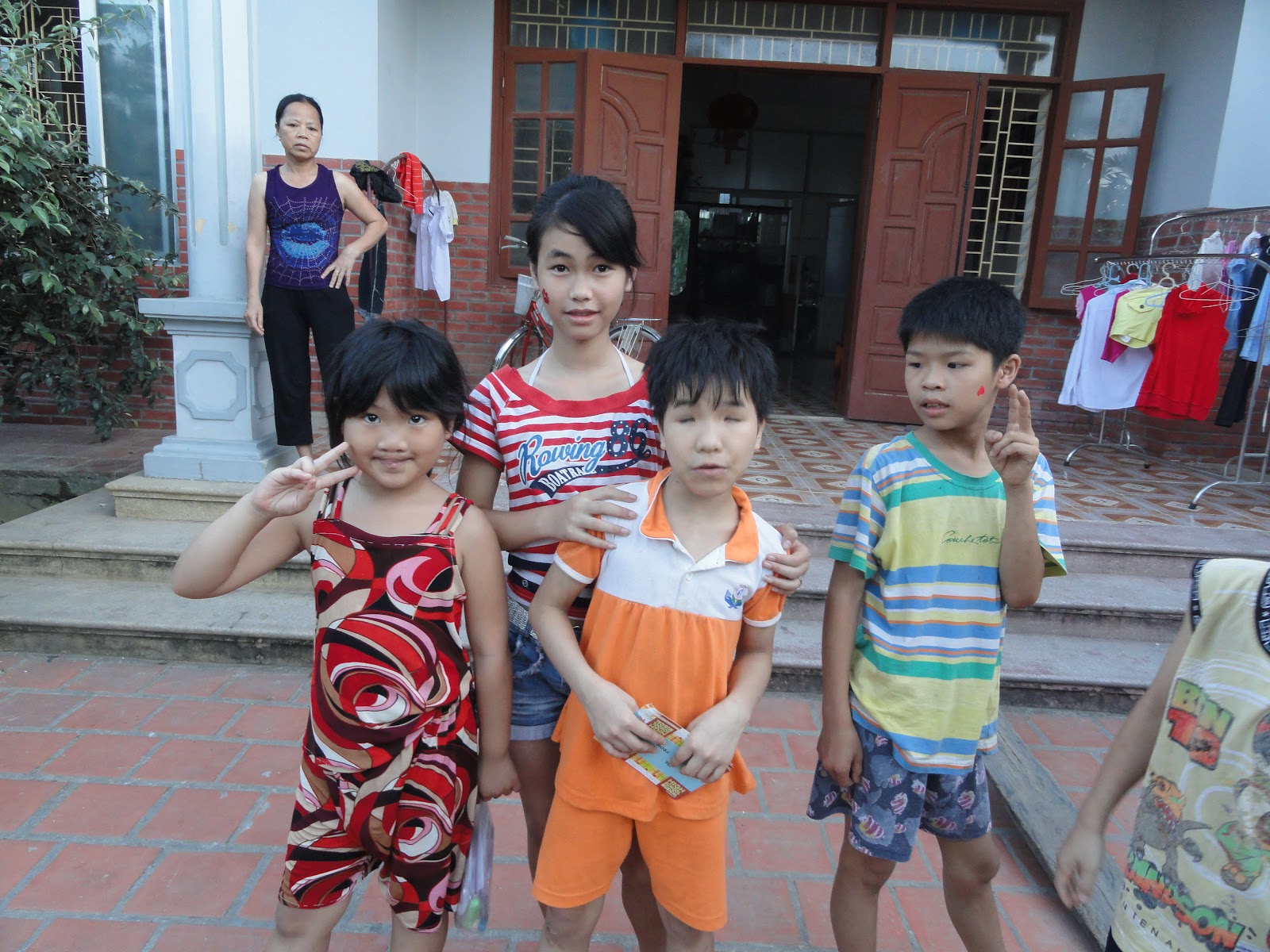
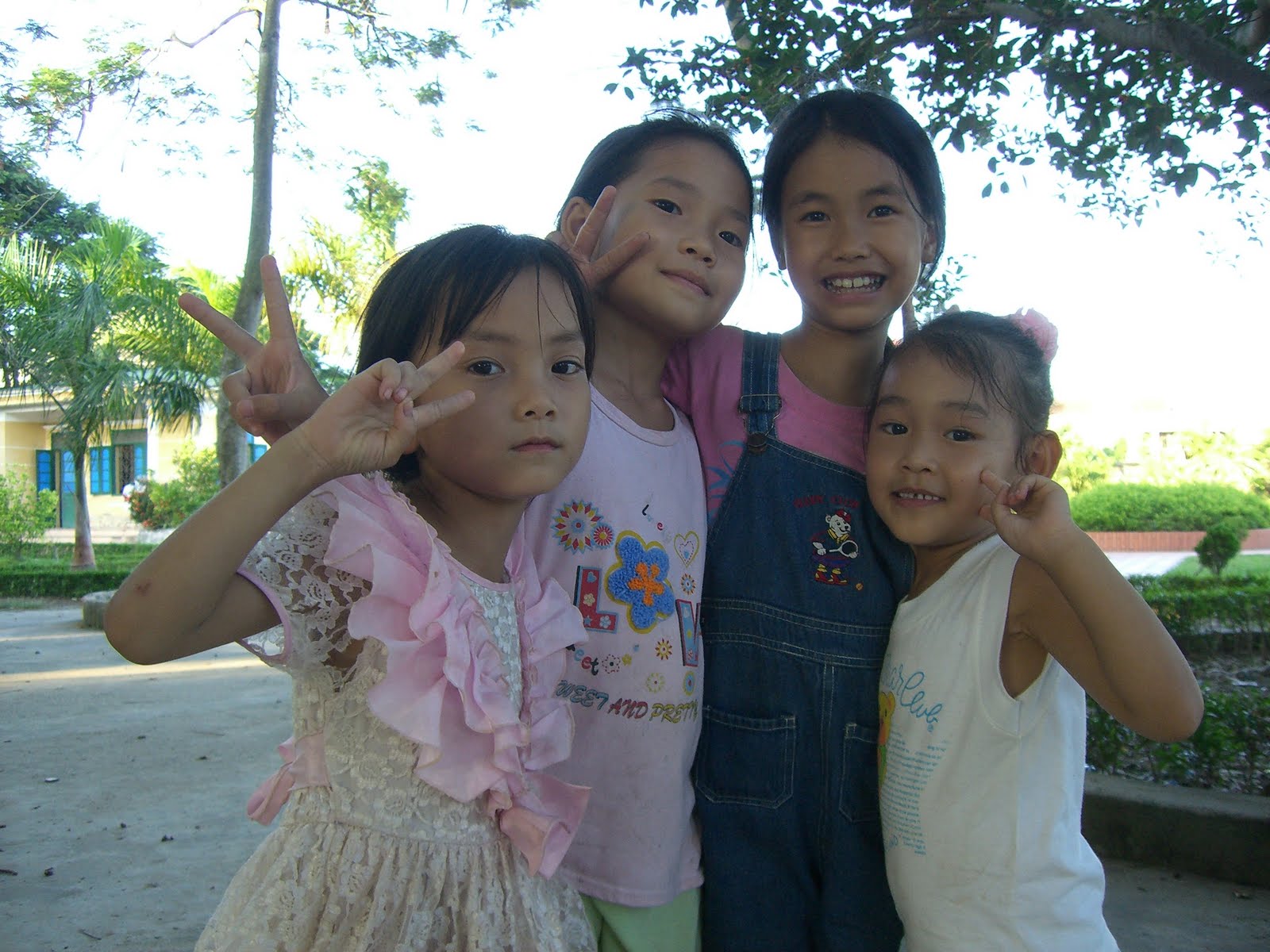
June 1, 2012 is International Children's Day. It is celebrated in many countries around the world. Enjoy images of the children we support in Viet Nam.


Tuesday, May 22, 2012

THANK YOU AGForestry Leadership

On behalf of the children we serve,
THANK YOU for your donation of $1000
to support Kids Without Borders programs/projects
in Viet Nam.

Wednesday, May 9, 2012

Kids Without Borders Night in Viet Nam

You are invited to a fun event organized on behalf of Kids Without Borders this coming Sunday at 8pm in Saigon. The wonderful performers/musicians/singers donate their talent and time at this musical cencert and all proceed will go to support building a small bridge for the children in Bong Lai (Quang Binh). The event is a joint effort between Kids Without Borders (U.S) and Viet Horizon Club (VN). Ticket costs 200,000 VND and all proceed will be donated to the ‘Loving Bridge Project).

For more information, please contact us at info@kidswithnoborders.org


Wednesday, February 15, 2012

Too young to make a difference? Meet Chloe, one of our volunteer.


Volunteering in Vietnam

by Chloe Kilguss

This is the story of the time I went to Vietnam and volunteered at the Go Vap Orphanage in Ho Chi Minh City. My name is Chloe and my sister, my mom and I went to Vietnam for 2 months. My sister was born in Vietnam and I was born in China.


Our first day at the orphanage was with Mr. Pham and some other volunteers that were involved with Kids Without Borders. I was mostly excited about seeing the babies and when I heard we would be able to feed them, I was even more excited! First we were given a tour of the orphanage. It was pretty big and had 3 floors and many rooms and hallways and courtyards. The little kids seemed happy to see us and we passed out candy. When we saw the babies they were on a mat playing with the nannies. I sat down and was able to pick up a baby. I was happy that she did not cry.


This is the doorway to the babies’ room. Every day we were at the orphanage, we went in here to feed the babies. Sometimes just my mom fed the babies because it was kind of hard to do. Before we would go into the room, we always washed our hands. It is important to keep the babies free from germs. First we would play with the babies on the mats for about 10 minutes then we would help move all the babies back to their cribs. After that, the nannies would pour milk into the bottles and put the bracelet with the name of the baby whose bottle it was on the bottle. After the baby was fed, the bracelets into a pile like this.


All of the children were so sweet and friendly and I loved them all! One of the babies was blind and had a heart problem. I don’t remember her real name, but we called her Rose because my mom thought her name in Vietnamese meant Rose in English. She was gone for 3 days while were there and she had a heart operation. All of us were so happy to see her back happy and healthy!


There were lots of other kids at the orphanage too like the hydrocephalus kids. Hydrocephalus is when fluid can’t drain from your head, which makes the skull grow larger than usual. In the room with hydrocephalus kids, there were other kids who had different disabilities as well. For example, there was a sweet girl named Hien that we called Dancing Girl because she liked to dance. Her feet turn inward and she walks on the sides of her feet, but she always had a smile on her face.


On our last day, there was a little boy who blew kisses to me and said “bye bye.” I don’t know if he knew it was our last day, but it was cute. Co Loan, the director, invited us to a lunch of noodles, spicy and non-spicy nuoc cham, also some tofu and a green stuffed vegetable soup and some really good orange juice. Also she gave Lilly and I a pretty pencil pouch. Lilly’s is grey and mine is red with a pretty flower design.


Overall the orphanage was an amazing experience and I will always remember it. I hope to revisit sometime in the summer. I am thankful to Mr. Pham for giving me this opportunity.

Doorway to the babies' room

Hien, our Dancing Girl
 
One of the many hydrocephalus babies


Kids Helping Kids

Volunteering at the Go Vap Orphanage


By Lilly Kilguss

Hi! My name is Lilly Kilguss and I was adopted from Viet Nam when I was a baby. I have a brother and sister from China and I am the oldest in my family. I recently went to my home country, Viet Nam, for two months and yes, the trip was amazing! My sister came along too and of course my mom. While we were there, a big part of what we did was volunteer at the Go Vap Orphanage.


Son Michael Pham is the man who introduced us into the orphanage. His foundation is called Kids Without Borders. The first time we met Son Michael Pham, our meeting was at the Caravelle Hotel. He said to call him Chu Son. We also met a few people with what is called a HumaniTour. The whole group took two or three taxis to the orphanage.

When we arrived at Go Vap, we were all invited inside for tea by the director, Co Loan, who was so nice! Chu Son gave us a talk about what to expect inside the orphanage. Everyone brought something for the kids: Paper, notebooks, pens, pencils, scissors, candy, etc. Then, we took a tour of Go Vap. First, we went to a little room with about 10 to 15 kids about the ages of seven to ten. We brought gummy bears and Swedish fish that we passed out to the kids. The kids seemed really happy to get candy and were smiling and jumping around!

As soon as we were finished with meeting the little kids, we met with the hydrocephalus babies and some other sick kids on the second floor. We just walked around the first day but we would visit these sweet kids every day we were there. There were little designs such as characters from the Jetsons and Aliens on the ceiling because these kids are always in bed. Lastly, we headed to the newborn babies room where played with and fed the babies. All the babies in that room were so incredibly adorable. There was this one baby that I found so incredibly cute and adorable combined! His name is Kien! Kien has the cutest smile and laugh I’ve ever heard a baby laugh!


Well afterward, we said our goodbyes to the rest of the volunteers and we headed back to the hotel. After that, we pretty much had a daily routine of teaching there: First, we would sing songs to the little kids; after that, we would visit the hydrocephalus babies and comfort them; and lastly, we would feed the babies and then leave.


In the baby room, there was also a little boy who was 5 years old but very small. I think his name was Phuoc. This is his picture (see below). He liked to play with my glasses and he had a cleft lip that was repaired. My brother also had a cleft lip when he was born. Also there was a little girl named Nguyet who was the cutest thing ever and also had a cleft lip that was repaired. A lot of children get surgeries at the orphanage. For example, we met the Victory Baby that Chu Son helped to receive a surgery. He liked to ride his bike and also slide down the slide. He is very quiet because he cannot hear and he does not talk but it is fun to make him smile.


In fact, seeing all these kids every day and their awesome smiles just made me happy too. This group of boys was so much fun to see and were always happy to see us. They especially liked to sing along with the guitar that we brought with us. Working at the Go Vap Orphanage is one of the best experiences I’ve ever had because it was giving something to others. I know the kids may not have a lot because they are in the orphanage, but they just seemed like regular kids and I did not feel they were very different from me. A lot of the kids had some sort of a difference like their fingers stuck together or could not walk and had special chairs. After the first few days there, I just got used to it and it seemed like normal.

Son Michael Pham is doing an awesome job helping these kids in every possible way he can. I hope I can change the futures of some kids like him like maybe helping the babies with hydrocephalus because they are in their bed all the time.

On our last day at the orphanage, Co Loan had a special lunch for us and another volunteer from Sweden. I felt very sad to leave the orphanage and to leave Viet Nam, which is such a beautiful country. I really miss the kids now that we are at home and I hope to return to the Go Vap Orphanage again soon.


Sunday, January 8, 2012

Never too young to make a difference

January 3, 2012 - HAPPY NEW YEAR
A big THANK YOU to the Alcott Elementary Student Leadership for their huge collections of toothpaste, toothbrushes, and hygiene supplies. These donated products will be packed, and carried (as checked luggage) by the participants of the Washington AGForestry Education Foundation International Seminar to Viet Nam and Cambodia. The group will visit many of Kids Without Borders programs and projects in Viet Nam. Follow their trip on Kids Without Borders Facebook page.

Thursday, December 29, 2011

Teach Me To Fish

FOUR BROTHERS

We talked in a small restaurant over rice and fish. In many ways the four brothers are like young men anywhere in the world. Duong Kim Thao, 19, is about to take his university entrance exams in June. Tall, handsome and a natural athlete, he seems more excited about being elected captain of his school soccer team than he does at the prospect of more school. Nguyen Van Nghia, 18 years old and as unlike Thao as two brothers can be, is taking his exams much more seriously. He has just ranked first in natural science, math and chemistry in his school and plans to study banking in university. He prefers comic books and music to soccer and swimming. Tran Ngyuen Hoang Phi, 17 and the baby of the group, lets his big brothers do most of the talking (though he does manage to do most of the eating). All three look up to their oldest brother Huynh Tung Hieu who, at 19, is the first one to attend college. He is a serious boy with thick rimmed glasses and serious interests – engineering, books and newspapers are his bread and butter.


However, in one important regard they are very different from young men in much of the world. The boys are orphans and brothers in spirit if not by blood. Their experiences, their challenges and their victories provide an insight into a less regularly examined part of the life of a Vietnamese orphan – leaving the orphanage and carving a new identity and a new place for oneself in Vietnam’s status and family focused world.


Family


The importance of family is hard to overemphasize anywhere in the world and no less so in Vietnam. Responsibilities, identities, duties, marriage, schooling and jobs often revolve around the complex network of family connections that keep the culture, neighborhoods and industries of Vietnam humming. Wealthier students not only attend elite schools but are able to access afterschool programs in English, science, math and a host of other subjects. And looming over every Vietnamese student hoping to enter this country’s growing middle class are the all important National University Entrance Exams held each year in June and July. For the college bound, their scores on these tests can define the rest of their and their family’s lives. Families save and borrow to send their children to the best test prep academies.


The four brothers have none of these advantages. Coming from a world of dedicated but impossibly overworked teachers and nurses, there were no extra classes, tutors or foreign teachers to help these boys perfect their math, science or English pronunciation. Yet, while their material conditions may be limited, there are no bounds to these young men’s aspirations.


The oldest, Hieu, has already passed his exams and is completing a degree in engineering and architecture. While modest and humble, he says he remembers every person who has ever helped him, it is clear that his own work ethic and talent are the source of his academic success. Nghia, with the highest scores in his school in science, math and chemistry is not far from college himself.


Role Models


All four boys mentioned that adult sources of inspiration, advice and motivation were few and far between. While most mentioned that they appreciated their teachers they noted that in Vietnam’s conservative culture, teachers felt it inappropriate to discuss the personal problems or lives of students. A teacher is an instructor more than a friend or mentor. When asked about heroes and role models, the brothers all pointed to other children in the orphanage. Successful orphans became role models and older children offered not only academic help but advice on life, mortality and the all important transition to life outside the orphanage.


With 18 year olds given the impossible task of teaching 14 year olds how to be a man, it’s no surprise that the boys could think of numerous instances in which they had intentionally attempted to provide a good role model for the younger children. Of course they wouldn’t be children without plenty of stories of sneaking extra food, stealing candy from the teacher’s office and sneaking out after curfew to go swimming at the neighborhood pool.


But talking to these young men, one is struck by their commitment to building a community. Helping elders in the community and assisting victims of automobile accidents were good actions not just because they helped the people in question but because they helped to teach the younger children the difference between right and wrong.


The Future


When asked how they had managed to achieve success in school and life more generally, the boys pointed to many factors. Hardworking teachers. Good friends. Older students. Their own desire to prove they could succeed. And they mentioned the impact of volunteers from across the world that they had met as they grew up. The friendship, advice and glimpses of a wider world that volunteers had offered over the years all clearly mattered enormously to these young men, even when the volunteers were there only briefly.


Son Michael Pham, founder of Kids Without Borders (KWB), has personally mentored these young men and women and walked with them from the orphanage into the world outside. KWB Teach Me To Fish program has connected hundreds of volunteers from around the world with these youth and has lent them a hand when they need one to lean on.


As they leave the orphanage and attempt to carve their own way, these young men will wrestle with many obstacles that lie in their path. But as difficult as life is for a Vietnamese orphan, their friends, foreign volunteers and their ‘family’ of brothers will have served them well. They go into the world armed with confidence, good friendships and a stronger sense of family. What happens next will be up to them, but Son Michael has the utmost confidence that these young men and women will manage the tough roads in front of them.


To learn more about Kids Without Borders Teach Me To Fish Program and how you can support/contribute, please contact us at info@kidswithnoborders.org

Friday, April 8, 2011

Travel With A Purpose - Upcoming trip to Viet Nam in July 2011

LAST CHANCE to sign up for the 14th HumaniTour Viet Nam, July 7 - 16, 2011. For more information, contact info@kidswithnoborders.org

Thursday, January 20, 2011

Agent Orange - A Humanitarian Concern We Can Do Something About

January 5, 2011
FACT: Dioxin (the toxic contaminant in Agent Orange) is found in Da Nang at up to 365,000 parts per million. This is more than 300 times what the U.S. Agency for Toxic Substance and Disease Registry considers to require immediate remediation.
In a more-than-welcome announcement for thousands of Vietnamese families, the United States and Viet Nam has signed an agreement to clean up the toxic 'hot spot' in Da Nang. The United States appropriated $16.9 million toward the $34 million project in 2010 and work will commence in July 2011. There are still lots of work to be done, Da Nang is only one of the hundreds of 'hot spots' still left throughout Viet Nam and millions of disabled Vietnamese (many are children) affected by Agent Orange.
To learn more and to join our effort, visit www.makeagentorangehistory.org .
Below: photos from our recent tour (October 2010) of the 'hot spot' located in the Da Nang Airport (former U.S Airbase during the war).


Friday, December 3, 2010

Traveling with a purpose - KWB HumaniTour Fall 2010

Kids Without Borders HumaniTour Viet Nam
Fall 2010
- 14 days
- 31 travelers
- More than 2,000 pounds of gifts including medical supplies
- Orphanages, children service centers, school, ...
- Distributing 280 new wheelchairs and 14 new therapeutic wheelchairs
- Teach Me To Fish program
- Make Agent Orange History (www.makeagentorangehistory.org)

Follow our work on Kids Without Borders Facebook. For more information on the HumaniTour, contact us or visit http://humanitours.blogspot.com